Aug 30 • Rowe's Sports and Academic Services Ltd

Professional Qualifications in Bedford, UK: Explore Fitness, Massage, Teaching, Assessing and IQA Courses

Explore recognised qualifications in Bedford, UK—PT, gym, Pilates, Yoga, massage, assessing & IQA. Compare routes and start today.

Key Takeaways

  • Compare career-focused qualifications available to learners in Bedford, UK, and open each course page as you shortlist options

  • Pick one clear pathway based on the role you want next, such as fitness coaching, bodywork, teaching, assessing, or internal quality assurance (IQA)

  • Stack qualifications over time so you can offer more services, open up progression routes, and raise your earning potential

Find the right qualification in Bedford, UK without getting lost in course pages

If you are career-changing or upskilling, it is easy to lose an hour clicking between course pages and still feel unsure. Most learners end up comparing the same three things: the qualification level, the job outcome, and how soon they can start.

A simple way to avoid decision fatigue is to narrow your shortlist to 2–3 realistic options first, then only read the details for those. The goal is not to find the perfect course on day one, it is to pick a pathway you can start and stick with.

Next, use this quick filter to get down to a clear choice in 10 minutes.

  • Level: choose the lowest level that matches your current experience, then move up later if needed

  • Job outcome: write one target role in plain words (for example, PT in a gym, mobile sports massage therapist, or vocational tutor)

  • Time-to-start: decide whether you need to start this month or can wait 4–8 weeks

  • Study time per week: pick a number you can protect (for example, 3 hours on weekdays or one 90-minute block on weekends)

  • Proof it fits: check the assessment style and required practice hours before you commit

But here is the catch: the highest level is not always the best first step. Higher levels can work best when you already have clients, a placement, or a clear role waiting, and they can fail when you are still building confidence or time is tight.

If you do one thing, do this: choose the option with the clearest job outcome you can picture doing in the next 30–90 days. By the end of this guide, you will be able to pick your pathway and click straight through to the exact course you need, without reopening ten tabs.

Start in fitness and performance and build client-ready skills

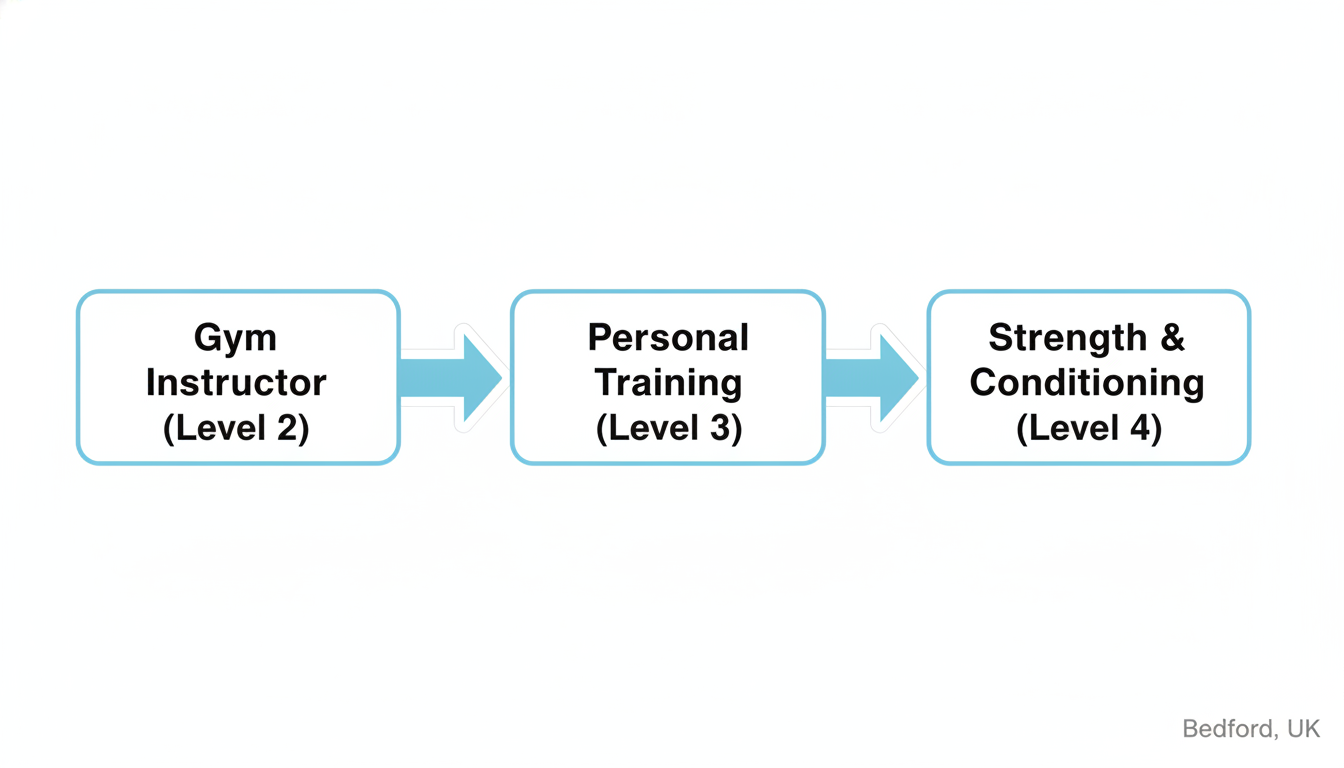
Next, pick an entry point that matches where you want to work first, then progress in a straight line. Level 2 is the quickest route into a gym role, Level 3 is where you start coaching clients as a personal trainer, and Level 4 is where you begin to focus on performance work like strength and conditioning.

If you do one thing, choose the qualification that matches the job you want in the next 3–6 months, not the job you might want in two years. That keeps you moving, earning, and learning without paying for training you cannot use yet.

Here’s a simple way to decide:

  • Start at Level 2 if you want to work on the gym floor, coach inductions, and run safe sessions with a wide range of equipment

  • Start at Level 3 if you already have Level 2 (or equivalent) and want to coach 1:1 clients, do consultations, plan training blocks, and guide basic nutrition habits

  • Go to Level 4 if you already hold Level 3 and want to specialise in strength and conditioning for athletes or performance-focused clients

Here’s the catch: Level 4 works best when you’re already confident coaching basics (squats, hinges, presses, pulls, warm-ups, regressions). It fails when you rush into performance coaching without solid day-to-day client delivery.

Common mistake: trying to skip straight to the most specialised course because it sounds more impressive. Fix: build client-ready skills in order so your coaching, screening, and programming keep up with the certificate.

Add specialist services with Pilates, Yoga, and Sports Massage

Next, if your clients keep asking for “more than workouts”, specialist services can help you keep them longer and serve them better. Adding Pilates or Yoga gives you movement coaching options for posture, mobility, and back care, while Sports Massage supports recovery, soreness, and recurring tightness.

If you do one thing, choose the add-on that matches the clients you already see most (for example, desk-based adults with stiff hips, runners with tight calves, or beginner gym members who lack core control). You will market it faster because you already know the problem and the language your clients use.

Here’s the catch: each service works best in a different scenario.

  • Pilates works best when clients need controlled strength, core, and technique focus, and it can fall short if they mainly want fast-paced conditioning

  • Yoga works best when clients want flexibility, breath work, and stress support, and it can fall short if they want highly sport-specific coaching

  • Sports Massage works best when clients have soreness, training load, or niggles to manage, and it can fail if you treat it like a replacement for rehab or medical advice

A common mistake is trying to sell all three at once on your price list. Fix it by building one simple pathway, like a 45-minute PT session followed by a 15-minute Pilates finisher, or a monthly recovery slot for regular gym members.

Move into teaching, assessing, and quality assurance in vocational education

Next, if you already support learners, apprentices, or staff development, a teaching or assessing qualification helps you formalise what you do and show it clearly on a CV. It also gives you a simple progression route: start by teaching, add assessing, then move into internal quality assurance (IQA), which is checking that assessment decisions are consistent and fair.

If you do one thing, choose the qualification that matches where you actually work day to day. Teaching qualifications suit people planning sessions and delivering learning, assessor qualifications suit people judging evidence and giving feedback, and IQA qualifications suit people sampling assessor work and writing feedback for assessors.

Here's the catch: most people pick an assessor course first, then realise they do not yet have access to learners or a placement to gather evidence. If you are short on time, start with the knowledge-based option, then move to the practical option once you can arrange access through your workplace, a college, or an employer partner.

Common mistake: assuming IQA is the same as assessing. Fix it by remembering the split:

  • Assessor: checks learner evidence and makes decisions

  • IQA: checks assessor decisions and keeps standards consistent across a centre

Closing remarks

There is no single career route. There is your next qualification.

So instead of searching for the perfect long-term plan, pick the next step that fits what you want to be doing 6 months from now. For example, that might mean feeling confident delivering 1:1 sessions, adding a second service like sports massage, or moving into teaching and assessment work.

If you do one thing, write down the role you want in 6 months and match it to one course outcome you can measure. Examples: coaching three paid clients per week, running two small group sessions on weekends, or supporting assessment decisions in a training team.

If you’re short on time, skip comparing every course page and focus on the skill you need next plus the minimum qualification that proves it. A common mistake is stacking certificates that do not change your day-to-day work, so choose the option that makes your next month easier, not just your CV longer.

Created with