
Oct 2 / Rowe's Sports and Academic Services Ltd

Beginner Yoga Classes in Bedford, UK: £20 Per Session

Key Takeaways

  • You can start yoga in Bedford with no flexibility or experience required for £20 per session. Call or text us at 07444136228

  • You’ll know what happens in a beginner class and how to prepare for your first session

  • You’ll learn how to book your spot and what to bring for a relaxed first class

When you want to start yoga but feel you are not flexible enough

Also, picture this: you’ve saved beginner yoga videos for weeks, but every time you think about pressing play, it feels intimidating. You might be telling yourself you need to be more flexible first, even though flexibility is one of the things yoga helps you build.

A useful benchmark is how quickly nerves settle once you actually begin. Many beginners say that after 3–4 sessions they feel more confident and comfortable with basic poses, even if they still feel “tight” in places like hamstrings, hips, or shoulders.

Here’s the catch: flexibility is not the entry requirement, but pain is a red flag. A good beginner class should give options, props (like blocks), and clear cues so a stiff body can work safely.

If you do one thing, do this for your first session in Bedford:

  • Tell the teacher you’re new and where you feel tight or sore

  • Choose the easiest version of every pose for the first 20 minutes

  • Aim for smooth breathing, not how far you can reach

  • Expect “felt work” in legs and core, not stretching discomfort in joints

A common mistake is forcing the stretch to match what you’ve seen online. The fix is to shorten your stance, use blocks, and keep a small bend in the knees so you can keep steady breathing.

Why beginners in Bedford choose a class not videos
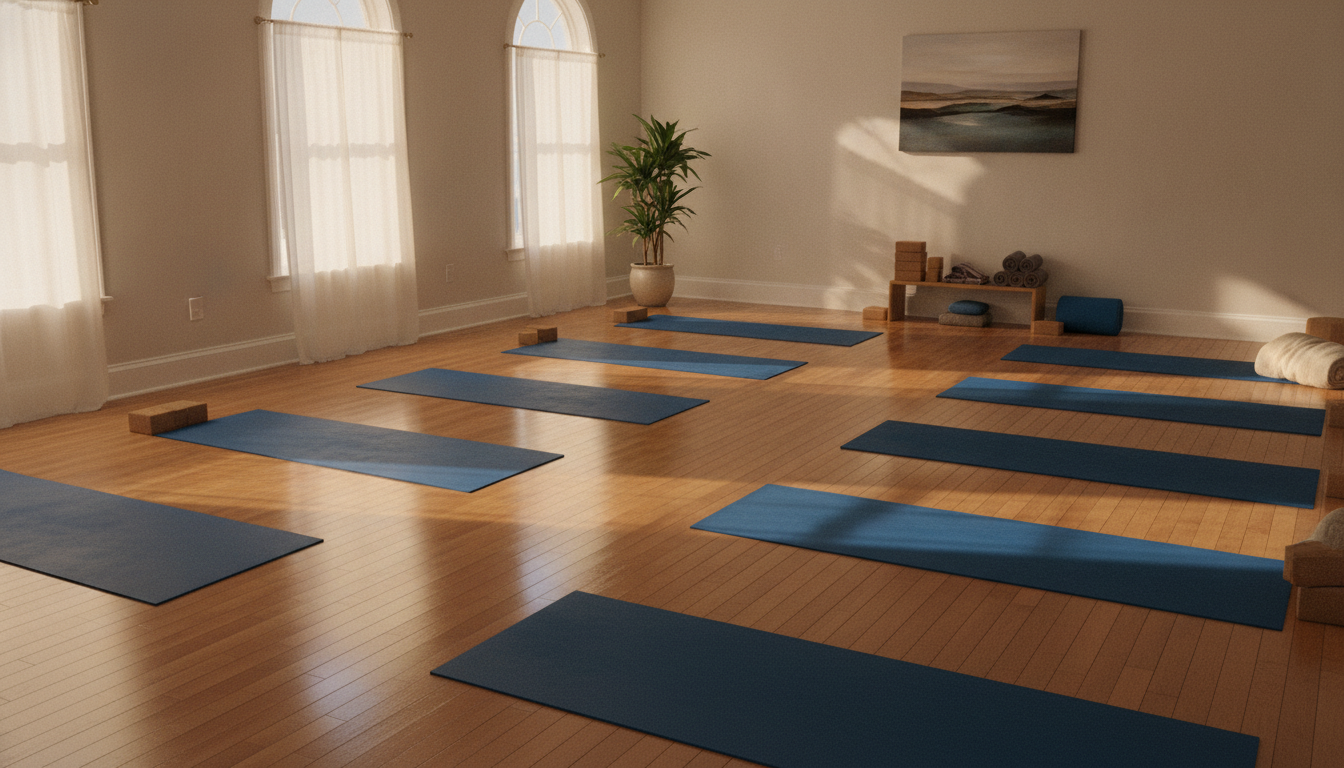
Next, it helps to clear up one big myth: you do not need to be flexible before you start. Flexibility is usually a result of showing up consistently for a few weeks, not a requirement you must meet on day one.

A common mistake with videos is trying to copy shapes that are not right for your body yet, then assuming you are doing yoga wrong. The fix is simple: start with comfort and control, and let range of motion improve gradually from there.

Also, instructor support changes everything for beginners because you get real-time form cues that keep you safe. For example, a teacher can spot a rounded lower back in a forward fold, a shrugged shoulder in downward dog, or knees collapsing inward in chair pose, and offer a quick adjustment or an easier option.

That weekly time slot is motivation you can actually rely on. If you do one thing, make it a standing appointment for 60 minutes each week, then use short 10 minute video sessions only as optional extra practice between classes

What happens in a one hour beginner yoga session
Next, it helps to know what the hour usually looks like so you can walk in without guessing. Most beginner sessions follow a simple flow that keeps things steady and never rushed, even if it is your first time back to movement in months.

A common one-hour flow looks like this:

  • Breathing and arrival (about 5 to 10 minutes) to settle your focus and learn a simple breathing pattern

  • Gentle warm-up (about 10 minutes) for hips, shoulders, spine, and wrists using easy motions on the mat

  • Foundational poses (about 20 minutes) such as Mountain, Chair, Downward Dog, Cobra, and a few slow lunges with clear setup cues

  • Balance and strength (about 10 minutes) using beginner-friendly options like Warrior shapes, supported Tree pose near a wall, and short holds that build control

  • Cool-down and relaxation (about 10 minutes) with longer stretches, a calm twist, and a short rest lying down

That said, you are not expected to keep up with anyone else. You will usually be shown options for tighter hips, sensitive knees, or tired wrists, and you can swap in a rest pose at any time without having to explain.

If you do one thing, do this: keep your breathing steady and choose the easiest version that lets you move with control. A common mistake is pushing into a stretch to “feel progress”; the fix is to back off until you can breathe normally and keep your face and jaw relaxed.

How to feel confident at your first class

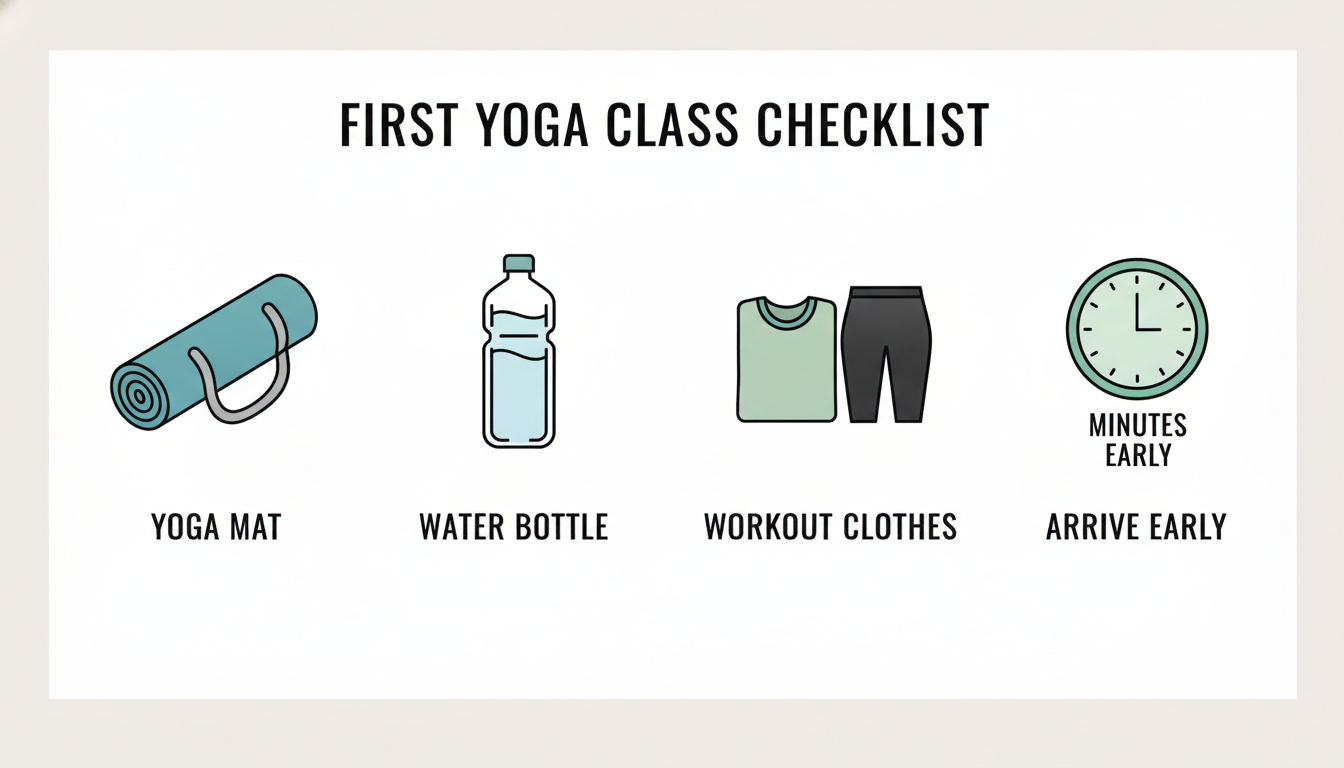
Next, set yourself up to feel calm before you even step into the room. Most first-class nerves come from uncertainty, so a simple plan for what to bring, what to wear, and when to arrive does most of the work.

Aim to arrive about 10 minutes early so you can find the studio, meet the teacher, and choose a spot without rushing. That small buffer is often the difference between feeling flustered and feeling settled.

What to bring and wear so you can focus

Bring only what you need so you are not juggling extra stuff at the door:

  • A yoga mat if you have one (many studios also have mats you can borrow)

  • Water

  • Comfortable clothing you can move in, like leggings or shorts and a T-shirt

If you do one thing, choose clothing that stays put when you raise your arms or bend forward. In practice, if you are short on time, skip buying anything new and wear your most comfortable gym clothes.

Common first-class worries, answered

Also, you do not need to “keep up” to get the benefit. Yoga works best when you move with your breath and take rests; it fails when you push through discomfort just to match the room, so pause in Child’s Pose or sit down whenever you need.

Not knowing pose names is normal because teachers usually show the shape and offer options. A common mistake is comparing yourself to the most experienced person in the room; the fix is to pick one simple focus for the hour, like steady breathing or smooth transitions, and let everything else be a bonus.

Closing remarks

Next, remind yourself that progress does not require a perfect plan or a perfect body. Start where you are. Use what you have. Do what you can

If you gave yourself one hour this week, what could shift in your body and mind by next month

Book your beginner yoga class in Bedford

FAQ

Do I need to be flexible to start yoga

No. Flexibility is something you build over time. A beginner class uses simpler shapes and options so you can work within your current range of motion without forcing positions.

What if I have never exercised before

That’s fine. Start at an easy pace, take breaks when you need to, and tell the teacher it’s your first class. Focus on steady breathing and controlled movement rather than keeping up with anyone else.

What should I bring to my first yoga class

Wear comfortable clothes you can move in. Bring water and, if you have one, a yoga mat. If you do not have a mat, ask ahead if the class has mats you can borrow.

How long is each session and what level is it

Beginner sessions are commonly 60 minutes. The level is designed for new students, with clear cues, slower transitions, and adjustments for tight hips, hamstrings, shoulders, or wrists.

How do I register and when are the next classes

Use the booking link or contact method on the class page to register. Class dates change week to week, so check the schedule for the next available sessions and reserve your spot early if spaces are limited.
Created with